Through Remember Well•, I have been connecting with people who are doing meaningful work across end-of-life care, grief, funeral support, death education and planning ahead. Iain McKinnon is one of those people.
Iain is based in Melbourne and brings together a rare mix of experience. He is a former registered nurse with palliative care experience, an end-of-life coach, deathwalker, funeral advocate, funeral arranger, celebrant and palliative aromatherapist. What stood out to me when I first connected with Iain was his coaching approach. His work is not only about helping people prepare for death. It is about helping people understand what matters to them, start difficult conversations, and make choices that reflect their own values.
A moment that shaped his work
Iain's understanding of death and dying was shaped early in his nursing career, while working on the acute HIV/AIDS ward at the former Fairfield Hospital in the early 1990s.
He shared the story of a young man in his late twenties who was admitted after feeling unwell. Within hours, he was told he had advanced lymphoma and likely had less than a week to live. He died five days later.
For Iain, that experience changed the way he understood end-of-life care. He saw the importance of honesty, humanity and careful communication when someone is given life-changing news. He also saw how meaningful it can be to simply be present with someone in that moment.
"It made me think there was no more important work one could do than enhance the experience for a dying person in a way that mattered."
That experience became a catalyst for almost 40 years of work in end-of-life care and communication.
Why coaching matters
Iain describes himself as an end-of-life coach, not only an end-of-life doula. When someone is facing a life-limiting illness, the practical, medical and emotional decisions can quickly become overwhelming. Iain's coaching approach helps people come back to their own values, life experience and inner wisdom.
He is an accredited resilience coach and conflict coach, with training and practical experience across several coaching methodologies. That background shapes the way he supports people to draw on their own life experience, clarify what matters, and move through end-of-life decisions with more steadiness and choice.
He believes people often already hold many of the answers they need. The role of coaching is to help bring those answers forward.
"Most of us have the answers we need from our life experience. Coaching someone can help bring some of their experiences into their consciousness and give them comfort, knowing they are in control of their journey."
For families, this can mean moving away from panic and towards clearer conversations about wishes, relationships, regrets, legacy and what really matters.

Once the conversations have been had, there are no more elephants in the room.
When families do not want to talk about death
Many families avoid conversations about death. Sometimes the response is simply, "don't be morbid."
Iain believes this often comes from fear, discomfort or the way death has become hidden in our culture. For many people, it is not death itself they fear, but the process of dying.
His approach is not to force the conversation. If someone is not ready to talk about death, he may begin by talking about life.
- What matters to you?
- What helps you feel in control?
- What do you value most?
- What worries you most?
From there, end-of-life conversations can become less confronting. Iain also encourages families to start with curiosity. A sentence as simple as "I wonder what you would want if..." can open a door without making someone feel pressured.
What families can do earlier
One of the strongest messages I took from Iain is that families do not need to wait for a diagnosis or a crisis before talking.
The conversation can start gently. It might come from a news story, the death of a pet, a film, a friend's experience, or a simple question about what matters. These smaller conversations can make later decisions less frightening. They can also reduce the pressure on loved ones who may otherwise be left guessing.
What a meaningful end-of-life journey can look like
For Iain, a meaningful end-of-life journey is built on knowledge, choice and preparation. People need access to information so they can make decisions that align with their values. Families also need to understand what may happen in the final weeks and days, so they are less frightened by the natural dying process.
He also sees funeral planning as an important and often overlooked part of end-of-life care. Without a clear plan, loved ones can be left making decisions while overwhelmed by grief. Even when conversations have happened, different family members may remember things differently. Having wishes recorded can reduce confusion, conflict and stress at a very difficult time.
A practical takeaway
Start learning. Research your options. Ask questions. Speak with an end-of-life practitioner. Learn what support exists before you urgently need it.
For families, it does not have to begin with a formal plan. It can begin with one conversation. One question. One wish recorded. One document found. One person told what matters.
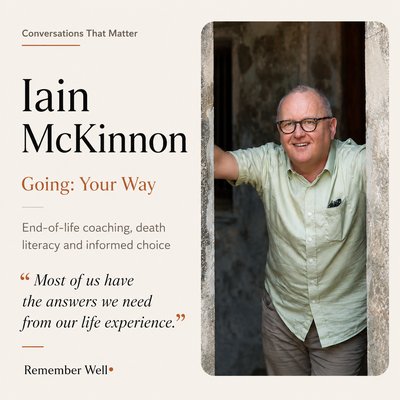
Going: Your Way supports people across metropolitan Melbourne, with regional Victoria by negotiation. Iain offers end-of-life coaching, deathwalking, funeral advocacy, funeral arranging, celebrancy and palliative aromatherapy. His approach helps individuals and families navigate end-of-life decisions, start difficult conversations, articulate what matters most and build resilience.
At Remember Well•, my hope is to help families feel more prepared, less overwhelmed and more supported through the practical steps before, during and after a death.
Iain's work is a reminder that practical planning and human support belong together. Families need clear information, but they also need compassion, conversation and choice.
Planning ahead is not about being morbid. It is about making space for clarity, care and the people we love.
Ready to record your own wishes?
Remember Well• helps you capture what matters, so the people you love are never left guessing. Free to start.
Start free →